Word Search Meow - Cat Puzzle
Yum Yum LabsWord
5.0112.00 Reviews
- Version
- 1.2.173
- Installs
- 10.00K
- Age Rating
- Everyone
Screenshots


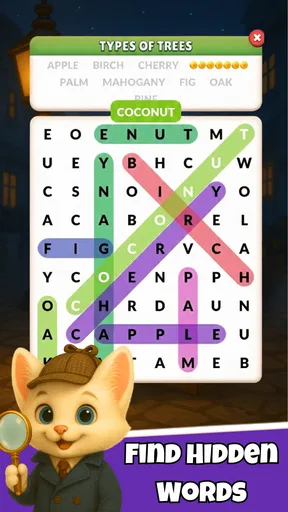
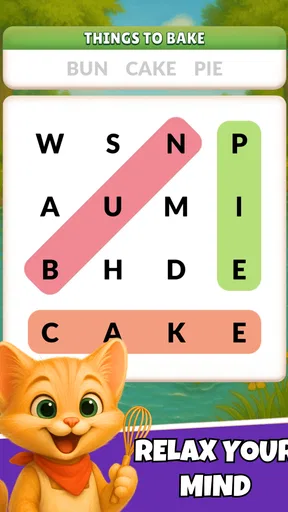
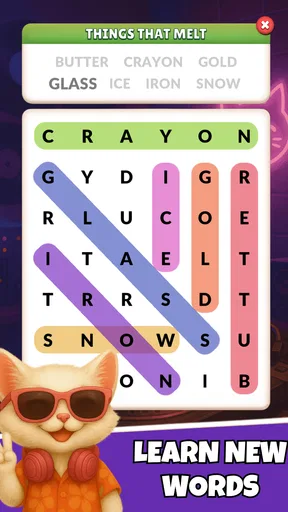
Our Review of Word Search Meow - Cat Puzzle
 Analysis by Appyee
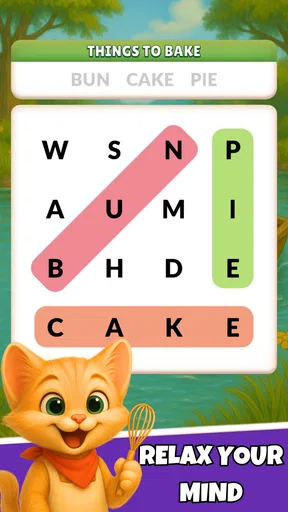
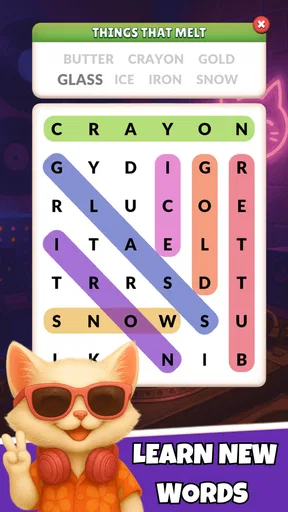
I found Word Search Meow - Cat Puzzle easy to understand within moments: it is a free word game from Yum Yum Labs built around finding hidden words while moving through a softer, cat-themed setting. That simple idea makes it feel more like a quiet break than a demanding brain-training session. I would recommend it to someone who enjoys word searches but wants a warmer, less clinical presentation than a traditional puzzle book or a bare grid app.
My overall impression is positive, with one important qualification: this is best approached as a relaxing pastime, not as a serious test of vocabulary or a competitive puzzle platform. The game’s store summary points toward cozy cat stories and a heartwarming experience for adults, and that tone comes through in the way the product presents itself. It is also suitable for Everyone, which makes it approachable for a broad audience, although the gentle theme should not be mistaken for a guarantee that every puzzle will suit every age or attention span.
How the word-search experience feels in everyday use
The appeal here is the familiar word-search format. I do not need to learn a complicated control system or understand a long set of rules before starting. The basic activity is immediately recognizable: scan the puzzle, spot a word, and trace it. That low entry barrier is valuable when I want something I can open during a short pause without committing to a long session.
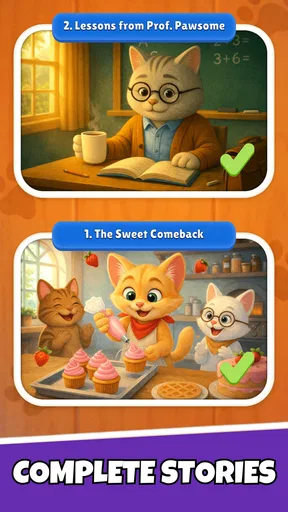
What gives this particular game its identity is the combination of word finding and cat-centered storytelling. Instead of feeling like a worksheet, the experience aims for a small, comforting escape. I can imagine using it after dinner, while waiting for an appointment, or during a quiet commute when I want something more engaging than scrolling but less intense than a strategy game. The cat theme is not just a search term; it sets expectations for the mood and helps separate this title from plain word grids.
The game is free to download, which makes trying it straightforward. There are in-app purchases ranging from $0.99 to $9.99 per item, so spending is possible, but the existence of those purchases does not by itself tell me how necessary they are during normal play. I would therefore begin without buying anything and pay attention to whether the free experience feels complete before considering an optional purchase.
That is also the fairest way to judge a casual puzzle game. A free entry point is useful only if it lets a new player understand the rhythm, presentation, and difficulty without immediately feeling pushed toward spending. In my experience of evaluating this kind of app, the first few sessions matter more than a polished description. They reveal whether the game respects short play sessions and whether its relaxing promise survives actual use.
A good fit for short, low-pressure breaks
One of the strongest use cases is the five-minute pause. If I have a little time before leaving home, I can turn to a word search instead of starting a game that demands a full level or a long chain of decisions. The format naturally supports stopping between puzzles, which is useful for people who want entertainment that can fit around an unpredictable day.
It may also work well for adults who like familiar puzzles but prefer a friendlier visual identity. Many word-search apps lean heavily on utility: a grid, a list of words, and little else. This one tries to add emotional texture through cats and stories. That makes it a better choice for someone who values atmosphere as much as the puzzle itself.
There is a practical benefit to the simple structure too. Word searches can encourage careful visual scanning without requiring advanced gaming reflexes. I would consider it suitable for a family tablet or for a relative who enjoys printed puzzle books but is comfortable using a phone. The Everyone rating supports that broad accessibility, although individual comfort with small text, touch controls, and screen brightness will still matter.
On the other hand, I would not choose it for someone looking for crossword-style clues, anagrams, spelling lessons, or deep vocabulary development. Finding words in a letter grid exercises attention in a different way from solving definitions or constructing answers. If the satisfaction comes from discovering a clever clue or learning rare words, a crossword or anagram app will probably offer more substance.
What progress feels like without turning it into a chore
The cat-story framing gives the game a reason to continue beyond completing one isolated grid. That sense of movement can make a familiar puzzle format feel more rewarding. I like the idea of having a gentle narrative thread alongside the searches, because it gives each session a little more personality than simply clearing another board.
Still, the value of that progression depends on how much the player enjoys the theme. Someone who finds cats charming may see the story elements as a welcome reward. Someone who wants only efficient puzzles may regard them as an interruption. This is an important trade-off: the same layer that makes the game distinctive can also make it less appealing to players who prefer a stripped-down interface.
I would use a simple personal routine to keep the experience relaxing. I would play one or two puzzles at a time, avoid treating completion speed as a personal obligation, and stop when the screen begins to feel tiring. Word searches can become visually repetitive if I stare at a grid for too long, so short sessions make more sense than forcing a marathon. The game’s cozy positioning works best when I let it remain a break rather than turning it into another task to finish.
Hints, difficulty changes, or other progression details should be judged directly inside the app rather than assumed from the theme. Those systems can change how much pressure a player feels, and they are especially important if purchases are connected to assistance or continued play. I would not spend simply because a puzzle becomes slower; I would first decide whether solving it unaided is still enjoyable.
Fairness matters more than the free label
The purchase range is clear enough to establish the basic spending context: the game costs nothing to download, while individual in-app items can cost from $0.99 to $9.99. That is useful information for budgeting, but it does not automatically prove that the design is generous or restrictive. A fair judgment requires looking at how often the game presents purchase prompts, what each item actually does, and whether a player can continue comfortably without paying.
My recommendation is to treat the free version as a trial of the complete mood and core activity. Play long enough to decide whether the word searches themselves are satisfying. If the main pleasure comes from finding words and following the cat stories, a purchase should feel like a deliberate choice to support or extend that enjoyment, not a reaction to sudden frustration.
I also prefer to separate convenience from necessity. If an item merely saves time or offers an optional extra, that is a different proposition from an item required to keep playing. The store facts establish that purchases exist, but they do not establish their exact role, so I would avoid promising that the game is fully free of pressure or claiming that every player can unlock everything without spending. The sensible approach is to inspect each offer before confirming it and keep device purchase controls enabled for shared devices.
This is particularly important when children can access the device. The Everyone rating describes the content audience, not the household’s spending habits. A parent may be comfortable with the theme and still want a password or approval step for purchases. That small precaution keeps a gentle puzzle game from becoming an unexpected expense.
How it compares with familiar alternatives
Compared with a printed word-search book, this game offers portability and a more animated, themed presentation. I can carry many puzzles on a phone rather than a physical book and pen. The trade-off is that a screen can be more tiring than paper, and a digital game may include purchase prompts that a printed book does not.
Compared with a minimalist word-search app, the cat stories are the main differentiator. A plain alternative may be better if I want to start a grid instantly, control the experience with as little decoration as possible, or avoid narrative material. Word Search Meow - Cat Puzzle is more suitable when the surrounding mood is part of the point.
Compared with crosswords, it is easier to enter and generally less dependent on interpreting clues. That accessibility is a strength for casual play, but it also means the mental challenge may feel lighter to experienced crossword solvers. Compared with competitive word games, it should appeal more to people who dislike timers, rankings, or pressure. Anyone seeking head-to-head play or a measurable skill ladder should look elsewhere.
The game’s average rating is 5.0 from around 1.2 thousand ratings, and it has more than 10 thousand installs. Those figures suggest a very positive early reception and a meaningful group of players, while the total install count still places it in the smaller, newer end of the app landscape. I would take that as encouragement rather than proof that it will suit every word-game fan.
Small details I would consider before installing
Compatibility is relatively broad for a modern Android title: the game requires Android 8.0 or later. That means owners of older devices should check their operating system before expecting to install it. On a supported phone, I would also consider whether the display is large enough for comfortable letter tracing, since word searches depend on seeing the grid clearly and touching the intended path accurately.
The current version is 1.2.173, and the game was released on September 1, 2025. Those details matter when comparing experiences across devices or reading older comments. A review written around an earlier build may not describe the same balance or presentation, so I would give more weight to recent impressions than to assumptions based on the launch version.
Another practical point is attention. A cozy theme can make an app feel calm, but the core task still involves scanning rows, columns, and diagonals. If I am tired, have visual strain, or want something that can be played almost passively, this may not be the best choice. An audio-focused game or a simple idle activity would demand less visual concentration.
I would also decide in advance whether I want story atmosphere or pure puzzle density. If I am buying a word-search book specifically to solve as many grids as possible, any narrative pauses may feel unnecessary. If I want a pleasant ritual with a little character, the same pacing can be exactly what makes the app enjoyable.
Who should try it, and who should skip it
I think it is a good match for casual word-game players, cat lovers, adults who enjoy gentle presentation, and anyone wanting a low-commitment activity for spare moments. It is especially appealing if a traditional word search sounds familiar but a plain grid feels too dry. The combination of accessible play and a cozy setting gives it a clear personality.
I would be more cautious about recommending it to competitive players, advanced puzzle enthusiasts, or people who dislike in-app purchases on principle. The free price makes experimentation easy, but the purchase range means a user who wants a completely purchase-free environment may prefer a paid puzzle book or a premium app with one upfront cost. That alternative can be easier to budget, even if it lacks the cat stories and digital convenience.
It is also not my first choice for structured learning. The game may help keep the eyes and attention active, but I would not use it as a substitute for a spelling curriculum, vocabulary course, or therapeutic program. Its strength is relaxation through familiar word finding, not formal instruction.
My trust verdict after weighing the trade-offs
Yum Yum Labs has made a focused word game with a clear emotional direction. The concept is easy to grasp, the cat theme gives the searches more charm than a generic grid, and the free download lowers the barrier to trying it. The strong average rating and growing install base make it worth a look, especially for players who want something gentle rather than intense.
My trust in the purchase side is more measured. I appreciate that the available item range is visible, but I would still inspect the in-game offers and decide based on actual usefulness. I would not assume that paying is required, nor would I promise that the free route contains every possible extra. That balanced position is the most honest one when the purchase facts establish the prices but not the full function of each item.
The best reason to install it is not difficulty; it is the combination of a familiar puzzle and a comforting cat-centered atmosphere. If that sounds like the kind of small daily escape you want, the game is easy to justify as a free trial. Start slowly, keep spending optional, and judge whether the stories enhance the searches rather than distract from them.
For me, Word Search Meow - Cat Puzzle earns a recommendation for relaxed players who value mood, accessibility, and short sessions. I would skip it in favor of a crossword, competitive word game, or premium puzzle app when I wanted deeper challenge, head-to-head play, or a completely predictable one-time cost. Within its intended space, though, it offers a pleasant and specific take on word searching, with enough personality to make an ordinary break feel a little warmer.
Verdict
Strengths of Word Search Meow - Cat Puzzle
- Simple controls make it easy to start playing immediately.
- Cute cat theme adds charm without distracting from the puzzles.
- Short levels fit well into quick breaks or casual sessions.
- Word lists help improve spelling and vocabulary recognition.
- Works well for players who prefer relaxed, non-action gameplay.
Limitations of Word Search Meow - Cat Puzzle
- Difficulty may feel too low for experienced word-search players.
- Repeated puzzle patterns can reduce the sense of discovery over time.
- Small text may be uncomfortable on phones with compact screens.
- Progress can feel less rewarding without deeper customization options.
- Some players may find the cat theme too basic or repetitive.
Similar Picks in This Category
View All
Word Search - Word Puzzle Game
Bluetile4.8

Word Search Quest - Puzzles
Blackout Lab4.8

CodyCross: Crossword Puzzles
Fanatee, Inc.4.7

Words of Wonders: Crossword
Fugo Games4.9

Wordscapes: Word puzzle game
PeopleFun4.7

Word Search Explorer
PlaySimple Games4.9
Frequently Asked Questions
What is Word Search Meow - Cat Puzzle?
Word Search Meow - Cat Puzzle is a casual word-search game built around a charming cat theme. Players find hidden words in letter grids while completing relaxing puzzle levels. The game is designed for short play sessions and gradually introduces new challenges, making it suitable for both casual players and people who enjoy testing their vocabulary and observation skills.
How do you play Word Search Meow - Cat Puzzle?
Each level presents a grid filled with letters and a list of words to locate. You solve the puzzle by swiping across adjacent letters in the correct direction, including horizontal, vertical, and sometimes diagonal lines, depending on the level design. Finding all the listed words completes the stage and allows you to continue through the game’s progression.
Is Word Search Meow - Cat Puzzle suitable for children?
The game is generally suitable for children and families because its core gameplay is simple, non-violent, and focused on recognizing words and patterns. However, parents should still review the app’s advertising, optional purchases, and privacy details before allowing younger children to play. Difficulty can vary, so some levels may require reading assistance for early learners.
Does Word Search Meow - Cat Puzzle require an internet connection?
Basic word-search gameplay may be available without a continuous internet connection, which is convenient for playing during travel or in areas with limited service. Nevertheless, some features—such as advertisements, cloud-related functions, updates, rewards, or promotional content—may require connectivity. Availability can also differ between Android and iOS versions, so check the store listing.
Is Word Search Meow - Cat Puzzle free to download?
Word Search Meow - Cat Puzzle can typically be downloaded without an upfront charge, but free access may include advertisements or optional in-app purchases. These purchases could relate to hints, removing ads, or other convenience features. Before downloading, review the current store page for pricing, supported devices, age rating, and purchase information, since these details may change with updates.
Play our best games!


